
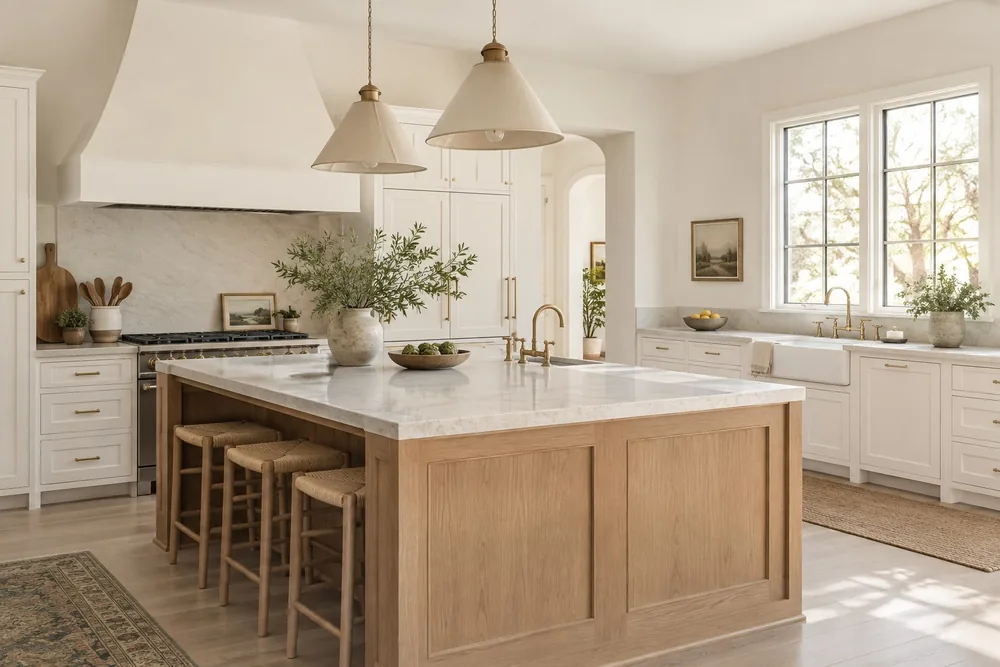
Begin with the weaker light
Heron Plume can be assessed for a north-facing room, but the direction alone cannot determine the result. Its LRV is 75; the key concern is a violet-white edge beside warm white furniture . Heron Plume's violet undertone is a reason to assess it carefully against warm fixed whites.
Why the ivory cabinets and gray fabric relationship matters
An ivory cabinet cannot be made compatible simply by calling the wall off-white; the actual boundary needs to feel intentional.
Heron Plume has an LRV of 75; Sherwin-Williams Aesthetic White SW-7035 is 73. The difference is 2 points, with Heron Plume returning more light under the reference measurement.
Keep the surroundings in the test
Begin where Heron Plume meets the permanent white fixture on the least illuminated wall. A pale paint still requires light, and a high LRV cannot make that fixture relationship disappear. Check the daytime boundary and repeat under the lamps that carry the room after sunset.
A lighting result needs a practical decision
Test the permanent ivory first; avoid selecting this white solely because a screen image looks neutral. The situations that call for another color covers that related choice.
Window size, obstruction and season still matter when choosing Heron Plume. A compass direction is not a brightness measurement. In the Northern Hemisphere, north-facing daylight is often less directly sunlit; the actual room remains the test. The daylight and evening-light checks covers that related choice. Before ordering samples, compare room-planning features in the paint color visualizer roundup.
Sources & notes
Color specifications: Sherwin-Williams Heron Plume SW-6070. The recorded LRV is 75. Named comparison values come from the respective manufacturers; material schemes are editorial suggestions.
This guide reviews published color information and proposes practical sample checks. It does not claim first-hand paint testing or customer-review scores. Sherwin-Williams does not sponsor or endorse this site. Product names and trademarks belong to their respective owners. Confirm the color in a physical sample and select the coating for the actual surface and finish.